Posts

Showing posts with the label WattaBird! African LoveBirds Breeding Chart

WattaBird! Unlocking the Palette: Breeding African Lovebirds for Mesmerizing Mutations!

Image
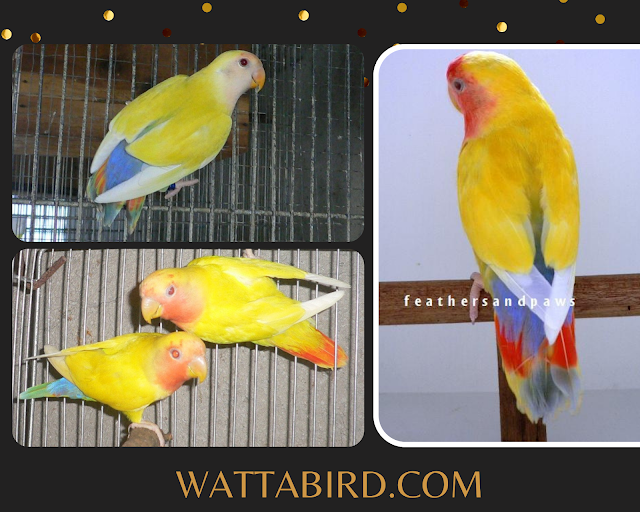
WattaBird! Unlocking the Palette: Breeding African Lovebirds for Mesmerizing Mutations! Breeding African Lovebirds to create new mutations can be an exciting and rewarding endeavor for aviculturists. Here are some potential breeding combinations to produce new African Lovebird mutations: Lutino x Lutino: Breeding two lutino African Lovebirds can result in offspring with a higher chance of being lutino, which is a beautiful all-yellow mutation. Lutino x Pied: Crossing a lutino with a pied Lovebird can produce visually striking pied lutinos with patches of yellow and other colors. Turquoise x Blue: Pairing a turquoise Lovebird with a blue one can produce visually appealing turquoise blues, which have a combination of turquoise and blue feathers. Violet x Blue: Breeding a violet Lovebird with a blue Lovebird can result in visually striking violet blues, combining the violet and blue colorations. Opaline x Normal: Crossing an opaline Lovebird with a normal one can produce opaline offspring...
WattaBird! Unlocking the Palette: Breeding African Lovebirds for Mesmerizing Mutations!

Image
WattaBird! Unlocking the Palette: Breeding African Lovebirds for Mesmerizing Mutations! Breeding African Lovebirds to create new mutations can be an exciting and rewarding endeavor for aviculturists. Here are some potential breeding combinations to produce new African Lovebird mutations: Lutino x Lutino: Breeding two lutino African Lovebirds can result in offspring with a higher chance of being lutino, which is a beautiful all-yellow mutation. Lutino x Pied: Crossing a lutino with a pied Lovebird can produce visually striking pied lutinos with patches of yellow and other colors. Turquoise x Blue: Pairing a turquoise Lovebird with a blue one can produce visually appealing turquoise blues, which have a combination of turquoise and blue feathers. Violet x Blue: Breeding a violet Lovebird with a blue Lovebird can result in visually striking violet blues, combining the violet and blue colorations. Opaline x Normal: Crossing an opaline Lovebird with a normal one can produce opaline offspring...

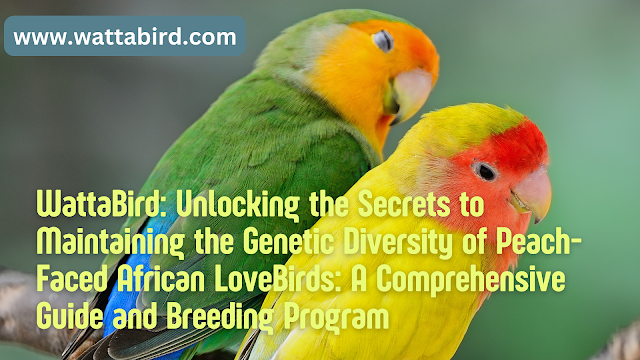
WattaBird! Unlocking the Secrets to Maintaining the Genetic Diversity of Peach-Faced African LoveBirds: A Comprehensive Guide and Breeding Program

Image
WattaBird! Unlocking the Secrets to Maintaining the Genetic Diversity of Peach-Faced African LoveBirds: A Comprehensive Guide and Breeding Program

WattaBird! Love Your African LoveBirds: Top Preventive Measures to Keep Them Healthy and Happy!

Image
WattaBird! Love Your African LoveBirds: Top Preventive Measures to Keep Them Healthy and Happy!

WattaBird! Unlock the Secret World of Peach-Faced African Lovebirds: How to Identify Rare Mutations!

Image
WattaBird! Unlock the Secret World of Peach-Faced African Lovebirds: How to Identify Rare Mutations!

WattaBird! Understanding the Peach-Faced LoveBirds Mutations

Image
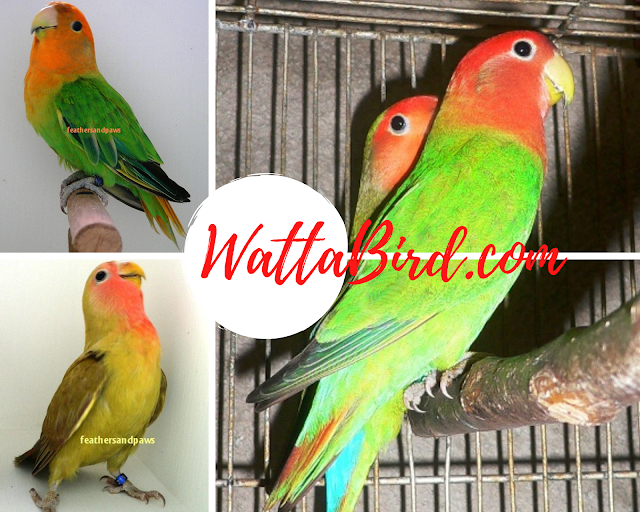
  Understanding the Peach-Faced LoveBirds Mutations  Photo Credits: Feathers and Paws Agapornis Roseicollis I have seen a lot of questions being posted in social media groups coming from Newbie Breeders asking help to identify the mutation of their LoveBirds.  In most cases, a pair of LoveBirds is posted and requests for help on what can possibly be the offspring for this pair. Some photos show the tail and wings part. These questions are very tricky to answer by just merely looking at the photos and without knowing the background of the parents.  I became fascinated about this topic with the objective of sharing the information in an easy to understand manner to help newbies get acquainted with the Peach-Faced LoveBirds mutations. My research led me to different sites and posts, but I got the most interesting and most informative presentation of this topic from an article written by Rick Smith from Lakeview Terrace, California.  The article is titled, The Peach...

WattaBird Breeding Chart: INO Mutation in African LoveBirds

Image
WattaBird Breeding Chart: INO Mutation in African LoveBirds    Agapornis Roseicollis This Breeding Chart aims to help provide an idea regarding the breeding combinations for the Ino mutation in African LoveBirds. This Ino Breeding Chart applies to both Albino and Lutino African LoveBird s, and therefore, I will be using the term “Ino” within this article. Albino is the term used to refer to White Ino LoveBirds . Lutino is the term used to refer to Yellow Ino LoveBirds . This Ino Breeding Chart will also provide a bloodline composition of the offspring, which will be useful for matching breeding pairs for a targeted result. The Ino gene is a Sex-Linked trait. This genetic trait is hereditary and can be passed on to the offspring. The Ino inheritance will depend on the INO genes the parents carry. Since the Ino trait is sex-linked , daughters will NEVER be Split-Ino . Daughters can only be either Visual Ino or Normal . Sons on the other hand can be, Visual Ino or Split-I...

WattaBird! Understanding the Peach-Faced LoveBirds Mutations (Part 3 of 3: Factor)

Image
WattaBird! Understanding the Peach-Faced LoveBirds Mutations (Part 3 of 3: Factor) Agapornis Roseicollis This is the Part 3 of 3 of the topic  Understanding the Peach-Faced LoveBirds Mutations.  If you have not read Part 1 and 2 yet, please visit this link:  WattaBird! Understanding the Peach-Faced LoveBirds Mutations (Part 1 of 3) WattaBird! Understanding the Peach-Faced LoveBirds Mutations (Part 2 of 3   “If You have any questions or suggestions, please leave a comment below.” FACTOR INHERITANCE This blog post will discuss the next method or pattern of inheritance which is what is called a  FACTOR. FACTOR  inheritance in African LoveBirds.  A FACTOR is a dominant mutation that can be carried by either sex. When a LoveBird carry a FACTOR, there is no such thing as a split.  In a DOMINANT trait, only one of the LoveBird parent needs to provide the the genetic information that makes up the chromosomes pairing in order for the trait to be seen visua...

WattaBird! Understanding the Peach-Faced LoveBirds Mutations (Part 2 of 3: Sex-Linked Inheritance)

Image
WattaBird! Understanding the Peach-Faced LoveBirds Mutations (Part 2 of 3: Sex-Linked Inheritance) Agapornis Roseicollis This is the Part 2 of 3 of the topic  Understanding the Peach-Faced LoveBirds Mutations.  If you have not read Part 1 of 3 yet, please visit this link:  WattaBird! Understanding the Peach-Faced LoveBirds Mutations (Part 1 of 3: Recessive Inheritance) “If You have any questions, suggestions, or topics to discuss please leave a comment below.” SEX-LINKED INHERITANCE This blog post will discuss the next method or pattern of inheritance which is what is called  SEX-LINKED. SEX-LINKED  inheritance in African LoveBirds are traits that are carried in the genetic chromosomes that also determines the sex of the offspring.  In sex-linked inheritance  daughters  will  NEVER be Split . Daughters  can only be either  Visual  or Normal. Sons  on the other hand can be,  Visual  or  Split . Here is a guid...

WattaBird! Understanding the Peach-Faced LoveBirds Mutations (Part 1 of 3: Recessive Inheritance)

Image
WattaBird! Understanding the Peach-Faced LoveBirds Mutations  (Part 1 of 3: Recessive Inheritance) Agapornis Roseicollis In order to understand the evolution of the mutations and combinations in the Peach-Faced African LoveBirds, we need to understand the three methods or patterns of inheritance.  They are  Recessive ,  Sex-Linked , and   Factor .  My research led me to different sites and posts, but I got the most interesting and most informative presentation of this topic from an article written by Rick Smith from Lakeview Terrace, California.  The article is titled, The Peach-Faced LoveBirds, Agapornis Roseicollis and its Mutations which was featured in the AFA WatchBird magazine. “If You have any questions, suggestions, or topics to discuss please leave a comment below.” Let us start with the  RECESSIVE  inheritance.   (This is Part 1 of 3) RECESSIVE INHERITANCE RECESSIVE  inheritance in African LoveBirds requires both parents t...